
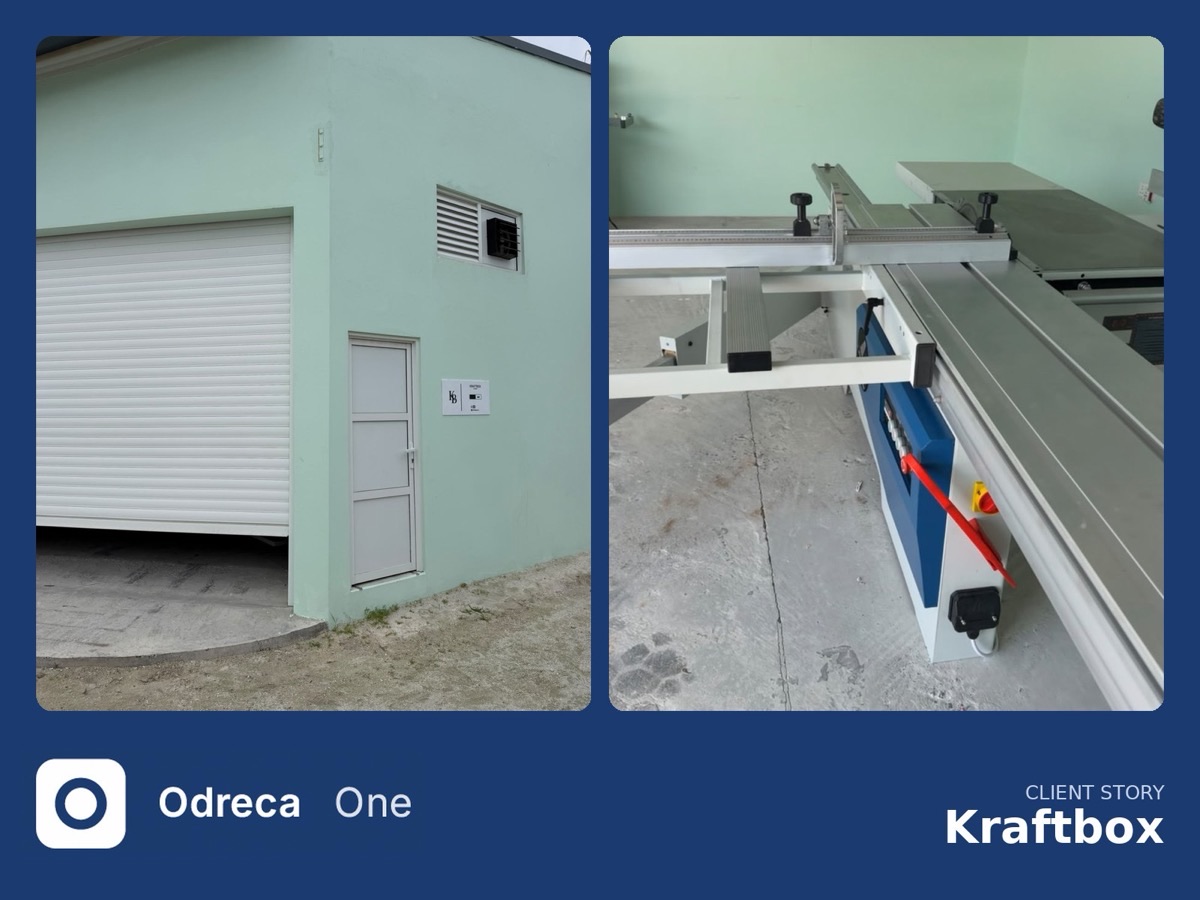
The workshop
Nailed It Co is a carpentry workshop on Kulhudhuffushi, in Haa Dhaalu Atoll. It builds tables, wardrobes and other furniture to order under the name Kraftbox, from timber and hardware it buys in. It went live on Odreca One in September 2026.
The challenge
A shop buys a product and sells the same product. A workshop does not. It buys timber, screws, varnish and fittings, keeps them in stock, and turns some of them into a piece of furniture that did not exist before. The customer pays part of the price when they order and the rest when the piece is delivered.
That is a harder thing to keep books for.
- Stock that changes shape. Materials go into stock as materials and come out as a finished table. The books have to follow the value through that change.
- A cost per piece. Each job uses a different amount of material. The owner needs to know what a particular wardrobe actually cost to make, not an average.
- Money before the sale. A deposit is not income yet. Until the piece is delivered it is money the workshop holds on the customer’s behalf.
- A sale that closes in two halves. The deposit and the balance arrive on different days, against one order.
How we solved it
- One integrated system. Purchasing, inventory, sales, manufacturing and accounting in one place, fully online.
- Manufacturing in its lightest form. A bill of materials for each kind of piece, listing the typical timber and hardware. No work orders, no routing, no shop-floor screens. Just enough to turn materials into a product.
- Orders that create the job. When a customer order is confirmed, the manufacturing job for it is created on its own, together with the delivery. The workshop records the materials actually used on that job, and that becomes the cost of the piece.
- Materials and finished pieces kept apart. Timber, screws and varnish are valued as materials. A finished table is valued as a finished table, at the cost of what went into it. Consumables are tracked as stock too, and the owner can untick the ones not worth counting.
- A deposit on order, the balance on delivery. The customer pays a deposit when the order is placed. Once the piece is delivered, a final invoice shows the full price with the deposit deducted, and the customer pays the balance.
- Quotations that show the margin. A quotation lists the materials, their current cost and the margin on the piece, on the workshop’s side only. The customer sees the price.
- Expenses next to sales. Electricity, water, transport, maintenance and subscriptions each have their own expense account, so the Profit & Loss shows the whole workshop.
- Supported and backed up. Encrypted offsite backups every night, and people to call.
What posts under the hood
Every step above posts the right accounting entry, and the owner never sees a journal.
- Buying materials puts them into stock at the price on the supplier’s bill.
- Making a piece moves the value of the materials used into the finished piece. The stock value stays the same. Only its shape changes, and nothing is charged to expenses at this point.
- Delivering the piece posts nothing yet. The piece has left the workshop, but it has not been sold until it is invoiced.
- The deposit invoice records the money received as a customer advance, not as a sale.
- The final invoice records the sale in full, clears the advance, and charges the cost of that piece to cost of sales in the same entry. Revenue and its cost land together, so the margin on each job is the real one.
- Each payment, deposit and balance, is recorded against its invoice, so the customer’s account shows what is still owed.
Once each job is invoiced, the stock value in the books equals the stock on the shelves and the benches. The only gap is a piece that has been delivered and not yet invoiced, and invoicing closes it.
What the owner has now
Materials bought, pieces made, deposits taken and jobs delivered, all in one set of books that keeps itself right. A quotation that knows what a piece will cost, and a Profit & Loss that knows what it did cost.
If you make things to order and your books are a folder of deposit slips and supplier bills, talk to us. We will show you what a workshop looks like on Odreca One.